
What Amazon’s Rufus Means for Your Listings in 2026
May 13, 2026
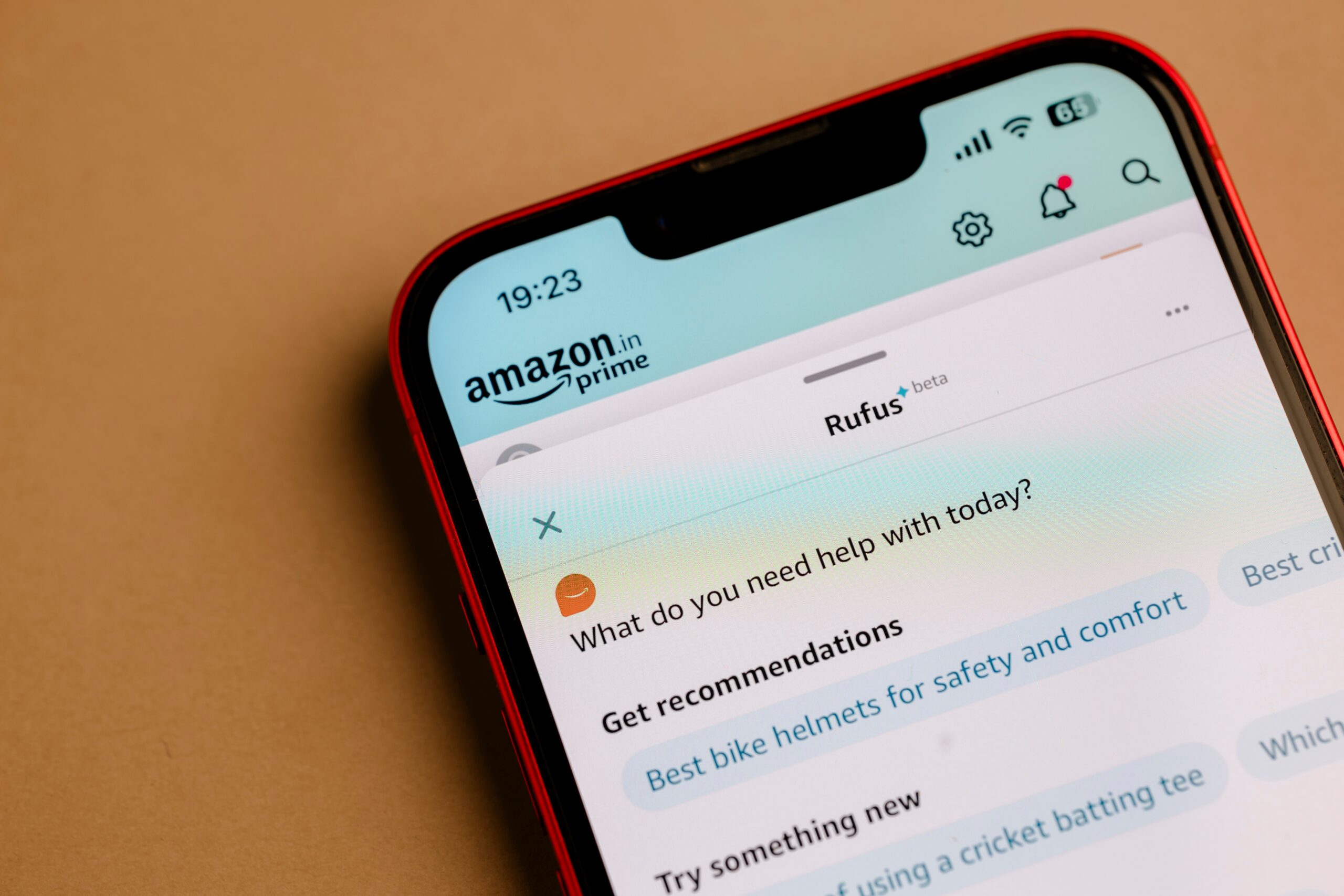
Amazon’s AI shopping assistant, Rufus, already influences 38% of Amazon shopping sessions. By Q4 2025, it had over 300 million users and drove nearly $12 billion in incremental sales. Shoppers who use it are 60% more likely to buy. Rufus does not rank products the way search does. It picks 3 to 5 products and recommends them conversationally. If your listing is not in that shortlist, you are absent from that conversation entirely. Understanding what Rufus means for your listings, and what it draws on, is now a catalog management priority.
Rufus Is Not a Search Engine
Traditional Amazon search shows a page of results. Shoppers browse and compare. Rufus is different. A shopper asks a question. Rufus picks a small set of products and answers conversationally.
A product not in that shortlist does not rank lower. It is simply not there.
Rufus now handles 15 to 20% of mobile queries, and that share grows every quarter. The question for your catalog is not how to rank higher. It is how to become a product Rufus can confidently recommend.
The Engine Behind Rufus: COSMO
Rufus runs on COSMO, Amazon’s commonsense knowledge graph. COSMO connects products to the contexts, use cases, audiences, and occasions shoppers associate with them. It does not match keywords. It makes inferences.
A query like “something for a new dad who likes cooking” has no exact keyword match. COSMO figures out relevance based on context. A listing that defines who the product is for, what problem it solves, and what occasion it fits gives COSMO the signal it needs. A listing built around keyword density gives it almost nothing.
What Rufus Actually Uses
Amazon has confirmed Rufus draws on titles, bullet points, descriptions, A+ Content, reviews, Q&A, and broader web data. Catalog research from April 2026 shows where the biggest gaps are.
Backend Attributes
Backend structured attributes are the most direct Rufus eligibility factor. Most brands are under-managing them. April 2026 catalog research found that structured backend data drives Rufus surfacing before listing copy is even evaluated.
Every empty attribute field is a gap. A shopper asking for a compact coffee maker for a small kitchen may not see your product in Rufus results, even if your title says “compact,” if the size and room-type attributes are blank. This is a data hygiene problem, not a copywriting problem.
Listing Copy
Rufus fields questions like “is this good for beginners” and “will this work with X.” Feature descriptions do not serve those queries.
The test for each bullet point is simple: does it describe a feature, or does it answer a decision-making question?
“Stainless steel construction” describes a feature. “Dishwasher safe and odor-resistant after six months of daily use” answers a question. The second version gives Rufus something to work with.
Q&A
Rufus indexes Q&A directly. Unanswered questions are a documented gap in Rufus input. Every answered question becomes content Rufus can draw on. For any ASIN doing meaningful revenue, review and answer the Q&A section systematically. Do not leave it to other customers.
Reviews
Rufus reads reviews to understand real-world use context. Products whose reviews mention specific use cases surface more often when Rufus receives matching queries. You cannot write reviews, but you can track patterns as a discovery signal. For Brand Registry sellers, Vine can help seed use-case language on new or undercovered ASINs.
Where to Start
Rufus sits on top of Amazon’s existing ranking system. Conversion rate, sales velocity, review volume, pricing, and Buy Box control still drive 80 to 85% of discovery traffic. Optimizing for Rufus does not replace SEO fundamentals. Complete, well-structured listings now serve more purposes than they used to.
The fastest path to improving Rufus visibility is a backend attribute audit. Follow this sequence:
- Pull your top ASINs by revenue.
- Check attribute completeness in Seller Central. Fill every relevant empty field: size, material, intended use, compatibility, room type, age range.
- Pull the Q&A section and answer every unanswered question.
- Treat repeated questions as a content gap. If the same question appears more than once, it belongs in your bullets or A+ Content, not just a Q&A reply.
April 2026 research points to backend attribute completion as having more direct impact on Rufus surfacing than any other single action. It is data entry, not a copywriting project. Most brands have not done it.
Bottom Line
Rufus recommends products to hundreds of millions of shoppers. Its share of discovery traffic grows every quarter. Attribute completion, Q&A management, and answer-ready copy are not complex projects. They are the starting point. Most catalogs have significant room to improve on all three.



Ready to scale your business?
Talk with one of our ecommerce experts.